
If you’ve ever read the Ten Commandments, you’ve probably seen the phrase “Thou shalt not take the name of the Lord thy God in vain.” But what does vain mean in the Bible, exactly? In simple terms, vain means empty, worthless, or without real purpose. When the Bible uses this word, it’s usually warning people against actions, words, or beliefs that have no true value or that disrespect God. This word shows up again and again throughout Scripture, from the Old Testament to the New Testament. In this article, you’ll learn what vain really means, where it comes from, how it’s used in famous Bible verses, and why it still matters today. By the end, you’ll have a clear, simple understanding of this important biblical word.
Quick Answer
In the Bible, “vain” means empty, useless, or without value. It can describe words that carry no weight, actions that produce no real result, or beliefs that lead nowhere. The word is often used to describe things done without sincerity, respect, or truth behind them. So when someone “takes the Lord’s name in vain,” it means using God’s name carelessly, disrespectfully, or for something empty and meaningless, not with honor or truth.
Meaning or Definition
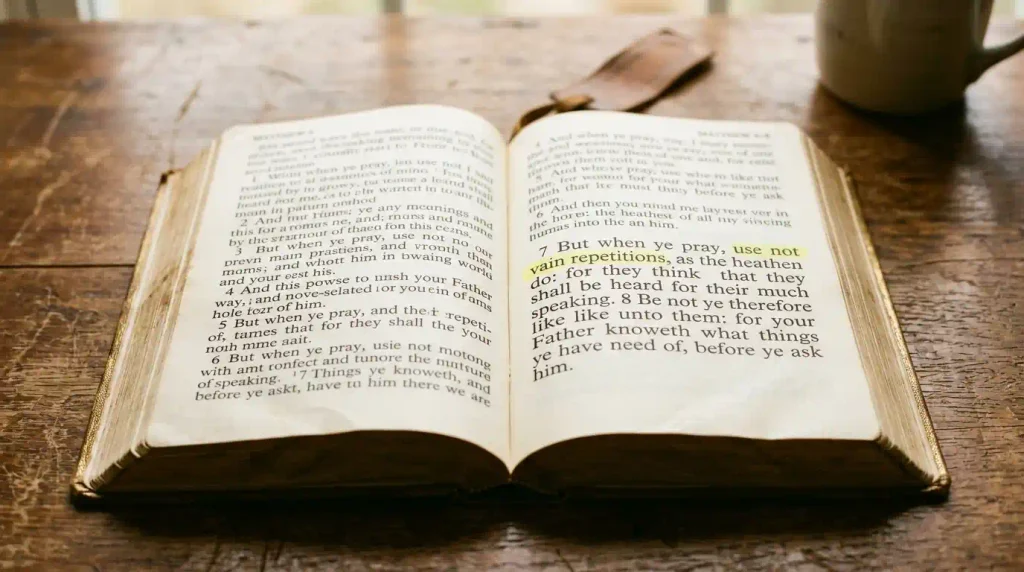
The word “vain” in the Bible generally points to something that lacks substance. Think of it like a beautiful gift box that turns out to be empty inside. That’s the heart of what vain means the outward appearance might look fine, but there’s nothing real or valuable inside.
In the Old Testament, the Hebrew word most often translated as “vain” is shav, which means emptiness, falsehood, or worthlessness. In the New Testament, the Greek word is often kenos or mataios, both of which mean empty, fruitless, or without purpose.
Here’s a simple table showing how “vain” appears in different Bible contexts:
| Context | What “Vain” Means | Example Reference |
| Taking God’s name in vain | Using God’s name carelessly or disrespectfully | Exodus 20:7 |
| Vain worship | Going through religious motions without real faith | Matthew 15:9 |
| Vain words | Empty talk with no truth or wisdom | Ephesians 5:6 |
| Vain efforts | Work or striving that leads to nothing lasting | Psalm 127:1 |
| Vain imaginations | Foolish or empty thinking | Romans 1:21 |
As you can see, the word “vain” isn’t limited to one single idea. It covers speech, worship, effort, and even thoughts but the common thread is always emptiness or lack of true purpose.
Origin or History

The concept of vanity in the Bible goes back thousands of years, rooted in ancient Hebrew thought. The Hebrew word shav appears in the Ten Commandments, specifically in Exodus 20:7, which says not to take the Lord’s name in vain. This command wasn’t just about avoiding curse words. It was about respecting the seriousness of God’s name and not using it for false oaths, empty promises, or disrespectful purposes.
Later, in the book of Ecclesiastes, the word “vanity” appears over and over. The famous opening line says, “Vanity of vanities, all is vanity.” Here, the Hebrew word is hevel, which literally means “vapor” or “breath.” This paints a vivid picture: life without God can feel like mist that appears for a moment and then vanishes. It’s not that life itself is worthless, but that chasing wealth, power, or pleasure without meaning leads to a feeling of emptiness.
By the time the New Testament was written in Greek, similar ideas carried forward. Writers like Paul used words like mataios to describe empty philosophies, false idols, and futile thinking that leads people away from truth.
Real Life Examples

Let’s look at a few well-known Bible verses that use the word “vain” so you can see it in action.
Exodus 20:7 “You shall not take the name of the Lord your God in vain.” This commandment warns against using God’s name lightly, in false promises, or as a casual expression without meaning or respect.
Psalm 127:1 “Unless the Lord builds the house, the builders labor in vain.” This verse teaches that human effort without God’s guidance can feel pointless, even if people work hard.
1 Corinthians 15:14 “And if Christ has not been raised, our preaching is useless and so is your faith.” Here, Paul is saying that without the resurrection, everything Christians believe would be empty and meaningless.
Matthew 15:9 “They worship me in vain; their teachings are merely human rules.” Jesus used this phrase to criticize religious leaders who followed rituals without real devotion or understanding.
Each of these examples shows a different angle of the same core idea: something that looks meaningful on the surface but lacks real substance underneath.
Common Mistakes
Many people misunderstand what “taking the Lord’s name in vain” actually means. Let’s clear up a few common mix-ups.
| Common Mistake | Correct Understanding |
| Thinking it only means saying “cursing” | It also includes false oaths, empty promises, and disrespectful use of God’s name |
| Believing “vain” always means “proud” | In modern English, vain can mean proud, but in the Bible, it usually means empty or worthless |
| Assuming vanity is only about looks | Biblical vanity is more about meaningless pursuits, not just physical appearance |
| Thinking it’s only an Old Testament idea | The New Testament also warns against vain talk, vain worship, and vain philosophy |
It’s worth noting that the English word “vain” has shifted a bit over time. Today, people often use “vain” to describe someone who’s overly focused on their appearance or self-image. That’s a valid modern definition, but it’s different from how the Bible originally used the word. Biblical “vain” is almost always about emptiness or lack of purpose, not about pride or self-love, though those ideas can sometimes overlap.
Current Usage or Trends
Even outside of religious settings, the biblical idea of vanity still shapes how we talk today. Phrases like “in vain” are common in everyday English, meaning something was done for nothing or without success. For example, someone might say, “We tried in vain to fix the car,” meaning their efforts didn’t work.
Interest in the biblical meaning of “vain” remains steady, especially among people studying Bible verses, preparing sermons, or exploring Christian teachings online. Many readers search for this topic because they’ve heard the phrase “in vain” in church, in the Ten Commandments, or in classic literature, and they want a clear, modern explanation.
Bible study groups often explore this word because it touches on important themes: honesty, sincerity, respect for God, and living a purposeful life. Understanding vain helps readers grasp bigger biblical ideas, like the difference between true faith and empty religious performance.
Tips or Best Practices
If you’re studying this topic for a sermon, Bible study, or personal reflection, here are some helpful tips.
First, always look at the surrounding verses. Context matters a lot in the Bible, and the meaning of “vain” can shift slightly depending on if it’s about speech, worship, or effort.
Second, compare different Bible translations. Some versions use “vain,” while others use words like “empty,” “useless,” or “futile.” Comparing translations can give you a fuller picture of the meaning.
Third, remember the difference between biblical and modern definitions. If you’re writing or teaching about this topic, it helps to clarify that biblical vanity means emptiness, not just personal pride, which is the more common modern usage.
Finally, consider using a concordance or study Bible. These tools show you every place a word appears in Scripture, which helps you understand its full meaning across different books and authors.
FAQs
What does it mean to take the Lord’s name in vain?
It means using God’s name carelessly, disrespectfully, or in a false or empty way, such as swearing a false oath or using His name without sincerity or reverence.
Is vanity a sin in the Bible?
Vanity itself, meaning emptiness or futility, is described as a result of living without God’s guidance. It’s not always labeled a “sin” directly, but chasing empty pursuits is often warned against.
What is the difference between vain and proud in biblical terms?
In the Bible, “vain” usually means empty or worthless, while “proud” refers to excessive self-importance. Modern English often blends these ideas, but they originally meant different things.
Where does the word “vanity” appear most in the Bible?
It appears most frequently in the book of Ecclesiastes, where the writer reflects on the emptiness of chasing wealth, pleasure, and achievement without God.
Can vain mean something different in different Bible translations?
Yes. Some translations use “vain,” while others use “empty,” “useless,” or “futile,” depending on the translation style and the original Hebrew or Greek word being translated.
Why is the phrase “in vain” still used in everyday English?
This phrase has been part of the English language and literature for centuries, largely due to the influence of the King James Bible, and it still fits naturally into modern speech.
Conclusion
Understanding what vain means in the Bible helps readers see a bigger picture of biblical teaching. At its core, vain means empty, worthless, or without real purpose, if it’s describing careless speech, empty worship, or effort without meaning. From the Ten Commandments to the book of Ecclesiastes, this word reminds readers to live with sincerity, respect, and true purpose rather than going through empty motions. If you’re studying Scripture, preparing a lesson, or just curious about a familiar phrase, knowing this meaning gives you a deeper appreciation for how intentional biblical language really is. The next time you hear “in vain,” you’ll understand exactly what’s being said, and why it still matters today.

About the Author
Hi, I’m Anas, a passionate writer at Wishlyo.com, where I love creating heartfelt wishes, messages, greetings, and quotes for every special occasion. I enjoy turning emotions into beautiful words that people can easily share with their loved ones. Through my writing, I aim to make birthdays, anniversaries, celebrations, and everyday moments more meaningful.